
Talk to an Expert
Ask one of our 3D Printing Specialists
 Leading Tech Since 1997
 Dynamism Digital Manufacturing Fast and Professional on-demand 3D Printing Start Printing Now
Replacement for aluminum, steel, magnesium, PEEK, PEKK, PAEK, ULTEM, Nylon CF..
 Important Note Before Purchasing
Key Features:
Free US Shipping
International customers: please contact us for delivery options.
Submit your most ambitious applications for Tullomer filament, and you could win the chance to bring your vision to reality. Winners will receive Tullomer filament and a unique opportunity to collaborate with our team to showcase your project.
Enter Now

Shop with Confidence
Dynamism will match a competing offer on qualified items. Learn More
Founded in 1997, we bring next-generation technology to customers, with an emphasis on expertise and white-glove service. Showrooms in Chicago, Detroit, Tokyo, and Seoul.
The leading national supplier of Desktop 3D printers. Expertise in both Industrial and Desktop 3D printing. Supplier of next-generation Metal, SLS, ultrafast Industrial printers.
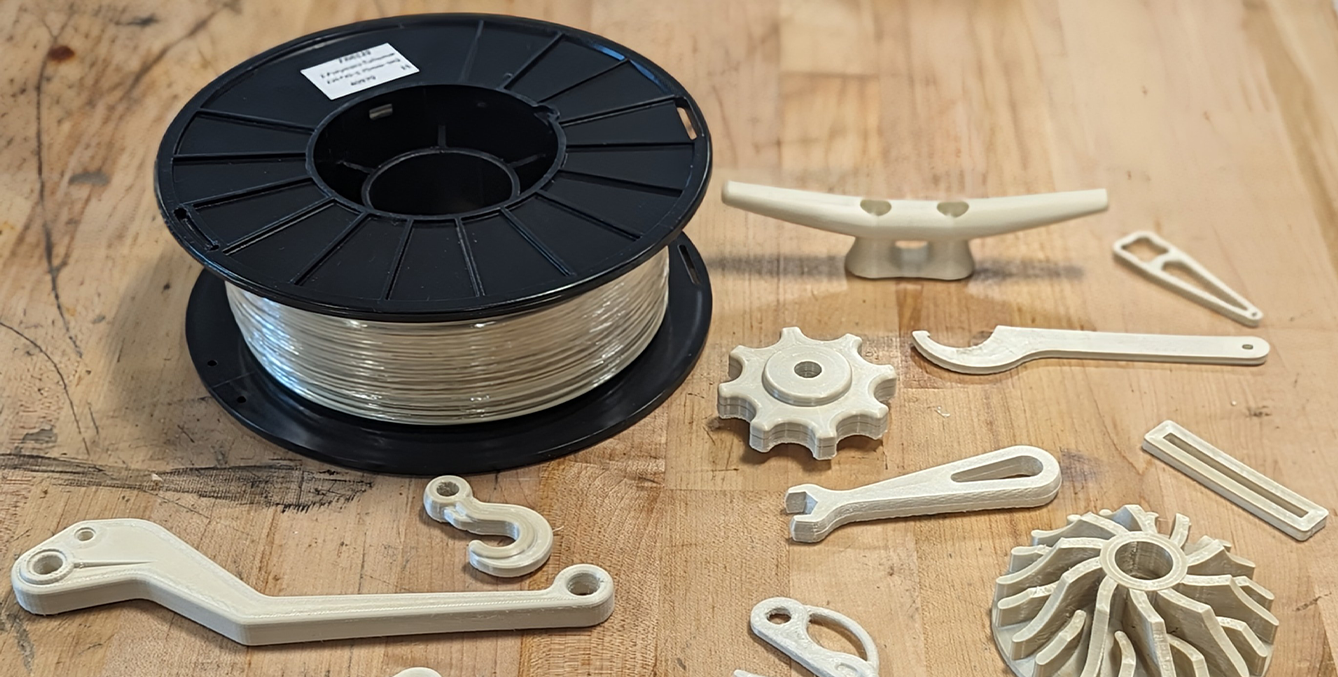
Tullomer is a breakthrough superpolymer engineered to match the mechanical performance of continuous fiber-reinforced materials like PEEK, Ultem, and PC—without relying on fibers.
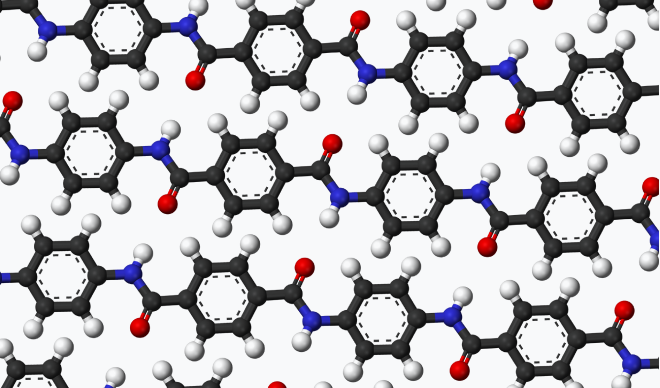
The key to Tullomer is the Mesogen Nematic Structures that line up in the same direction this alignment helps create strong fiber like properties. When the material is pushed through a nozzle the molecules stay lined up. This controlled alignment makes the material much stronger in the direction of printing.
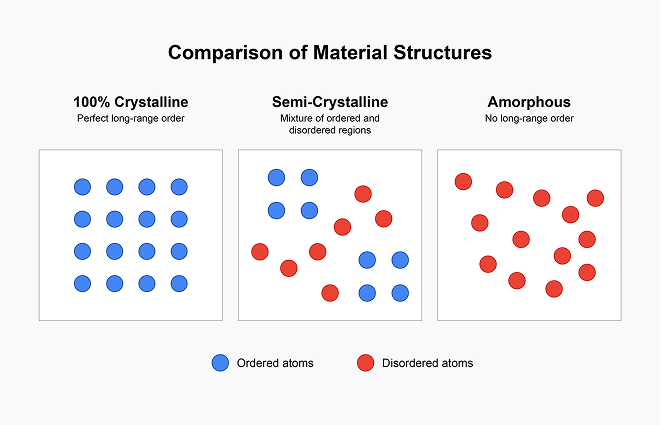
Tullomer is considered a 100% crystalline polymer, meaning its molecular structure is highly organized with a consistent repeating pattern, similar to the crystalline structure of metals. This crystalline structure is why it stands up to the performance of PEEK, Ultem & PC.
Tullomer excels in mechanical strength, chemical resistance, and stability across extreme environments, outperforming PEEK, Ultem, and PC in fiber-like performance.
Tullomer is strong and rigid in the X and Y directions, allowing control over part strength, even for complex shapes. Like most 3D printed materials, it is weaker in the Z direction due to layer bonding.
Founded in 1997, we bring next-generation technology to customers, with an emphasis on expertise and white-glove service. Showrooms in Chicago, Detroit, Tokyo, and Seoul.
The leading national supplier of Desktop 3D printers. Expertise in both Industrial and Desktop 3D printing. Supplier of next-generation Metal, SLS, ultrafast Industrial printers.
2025 Edition Professional 3D Printer Buyers Guide
Choosing the right 3D printer doesn't have to be difficult. Find the perfect printer for your application. This in-depth guide covers pricing, materials, dimensional accuracy, and more.
Download now